
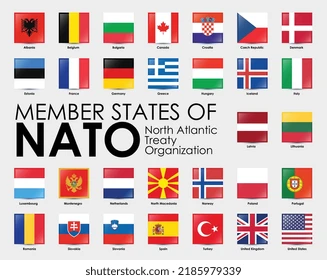
Did you know that NATO has grown from 12 founding members to 32 nations today? That’s a staggering 167% increase since 1949! This unprecedented expansion didn’t happen overnight—it’s the result of decades of strategic decisions that continue to reshape our world’s security landscape.
I’m here to break down everything you need to know about NATO expansion and why it matters more than ever in 2025. From Sweden’s recent membership to ongoing debates about future candidates, the alliance’s growth story is far from over. Whether you’re a policy wonk or simply curious about international relations, this guide will help you understand how NATO’s expansion directly impacts global stability, regional conflicts, and your own nation’s security interests.
The Evolution of NATO: From Cold War Origins to Modern Expansion
The North Atlantic Treaty Organisation emerged from the ashes of World War II as a collective defence mechanism against Soviet expansion. When twelve nations signed the Washington Treaty on April 4, 1949, they could hardly have imagined their alliance would eventually span from Iceland to Turkey, encompassing nearly a billion people.
The original founding members—the United States, Canada, the United Kingdom, France, Italy, Portugal, Norway, Denmark, Iceland, Belgium, the Netherlands, and Luxembourg—established the principle that would define NATO for decades: an attack against one is an attack against all. Article 5 of the collective defence guarantee became the bedrock of Western security architecture.
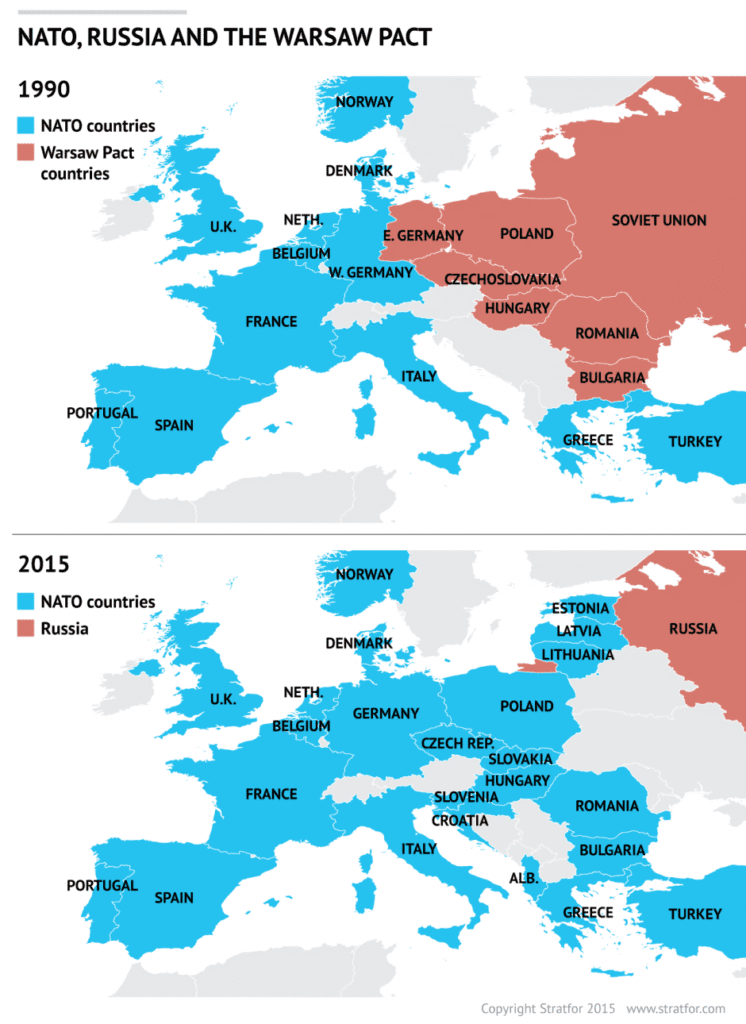
NATO’s expansion unfolded in distinct waves, each reflecting the changing geopolitical landscape. The first significant expansion occurred in 1952 with the addition of Greece and Turkey, followed by West Germany in 1955. But the fundamental transformation began after the Cold War ended.
The 1999 expansion brought Poland, Hungary, and the Czech Republic into the fold, former Warsaw Pact nations that had thrown off communist rule. This eastward expansion represented a fundamental shift in European security dynamics, marking the beginning of NATO’s most controversial period of growth.
The 2004 ‘Big Bang’ expansion was even more dramatic, adding seven new members: Estonia, Latvia, Lithuania, Slovakia, Slovenia, Romania, and Bulgaria. These additions extended NATO’s borders right up to Russia’s doorstep, setting the stage for decades of tension that continue today. This expansion significantly altered the geopolitical balance in Europe, leading to increased security concerns and a shift in Russia’s foreign policy towards a more assertive stance.
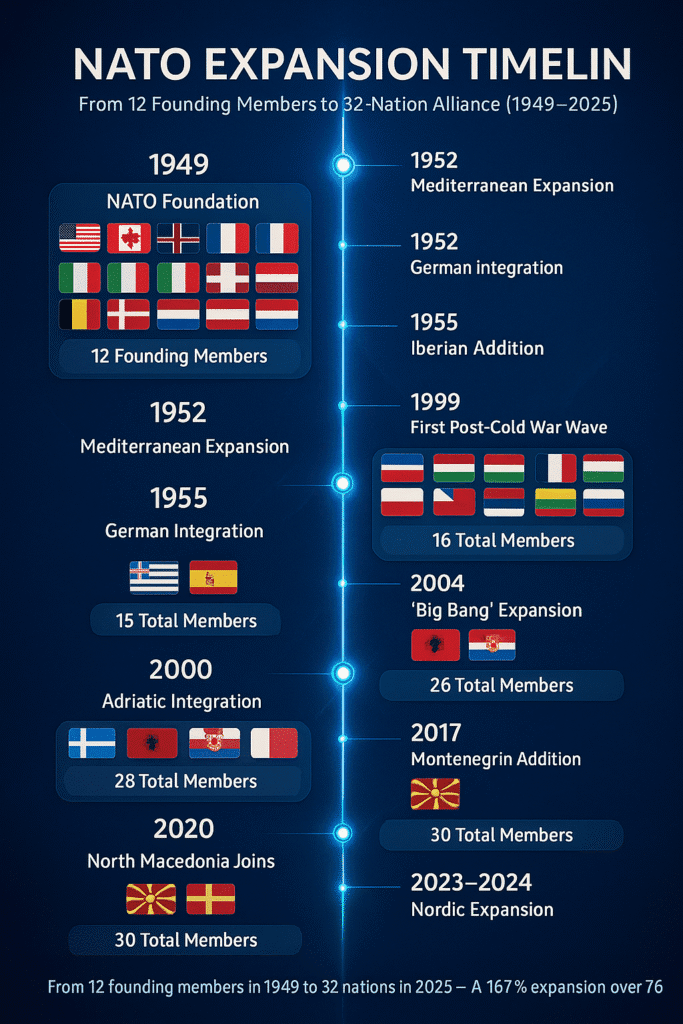
Subsequent expansions were more measured but equally significant. Albania and Croatia joined in 2009, Montenegro in 2017, and North Macedonia in 2020. Each new member brought unique capabilities and strategic value while also highlighting the alliance’s continued relevance in an evolving security environment.
The Partnership for Peace program, launched in 1994, played a crucial role in preparing potential members for eventual NATO membership. This initiative provided a framework for cooperation with former Soviet states and Warsaw Pact countries, enabling them to modernise their militaries and democratic institutions.
NATO’s Current Membership: Understanding the 2025 Alliance Structure
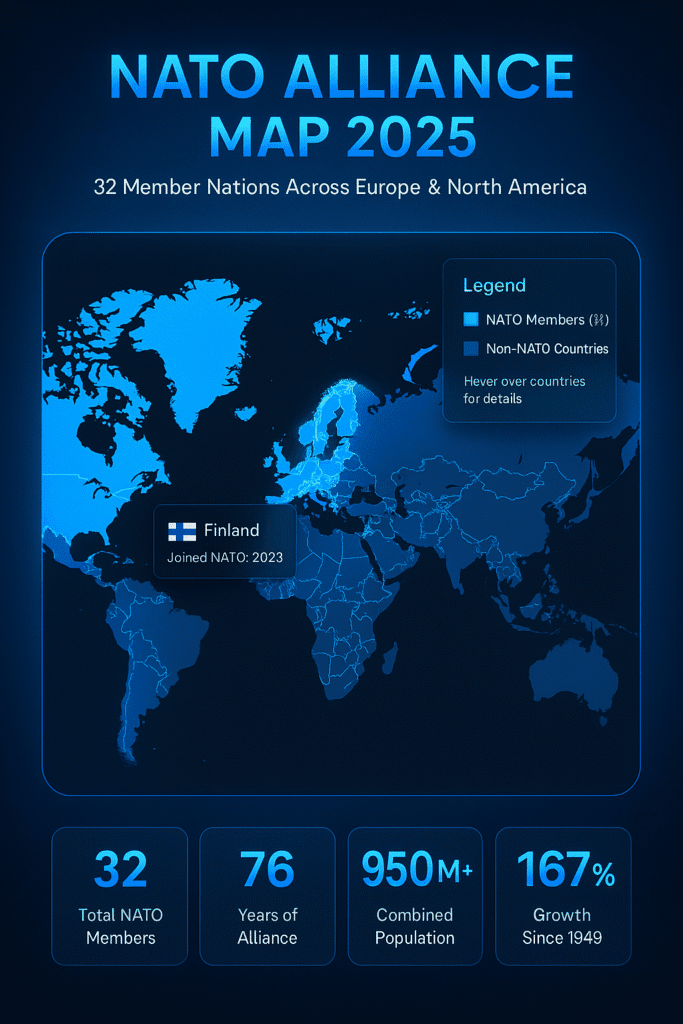
Today’s NATO is a far cry from its origins during the Cold War. The alliance now encompasses 32 nations across two continents, representing diverse economies, cultures, and military capabilities. Let me walk you through the current membership structure that defines NATO in 2025.
Sweden became NATO’s newest member in 2024, completing the Nordic expansion that began with Finland’s accession in 2023. This addition was particularly significant because it ended Sweden’s centuries-long tradition of military neutrality and created a virtually continuous NATO presence throughout the Nordic-Baltic region.
The alliance’s membership can be broadly categorised into several regional groupings. The original Western European core, comprising the UK, France, Germany, and the Benelux countries, continues to provide much of NATO’s political and military leadership. These nations make significant contributions to the alliance’s defence spending and maintain some of Europe’s most capable military forces.
The North American pillar, consisting of the United States and Canada, remains NATO’s backbone. The U.S. alone accounts for approximately 70% of total alliance defence spending and provides the nuclear umbrella that underpins NATO’s deterrence strategy.
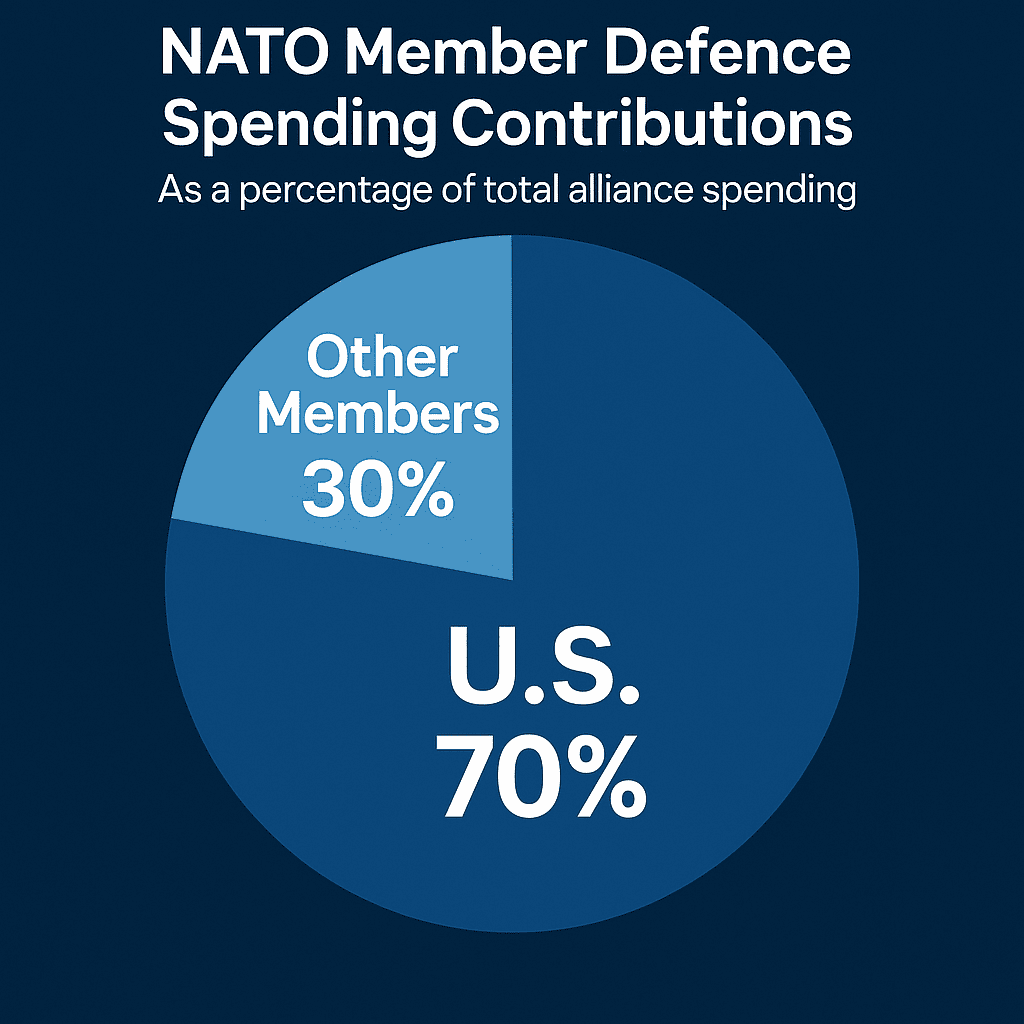
The post-Cold War members from Central and Eastern Europe—the so-called ‘New Europe’—bring unique value through their intimate understanding of Russian tactics and their strong commitment to collective defence. Countries like Poland and the Baltic states often exceed the NATO target of spending 2% of GDP on defence, demonstrating their commitment to burden-sharing. Their strategic location and historical experiences make them key players in NATO’s efforts to deter potential adversaries and maintain regional stability.
Southern European members, including Italy, Spain, Portugal, and Greece, provide crucial access to the Mediterranean and serve as gateways for NATO operations in Africa and the Middle East. Their strategic location and strong naval capabilities make them key players in NATO’s efforts to project power beyond Europe. Turkey’s membership remains strategically vital despite periodic political tensions, given its control over the Bosphorus Strait and its position bridging Europe and Asia.
Under Article 5, an attack against any of these 32 nations triggers the collective defence obligation that has never been invoked against a state actor, only once in history, following the September 11, 2001, attacks. This mutual defence guarantee remains the cornerstone of NATO’s deterrent effect.
Why Countries Want to Join NATO: The Appeal of Collective Security
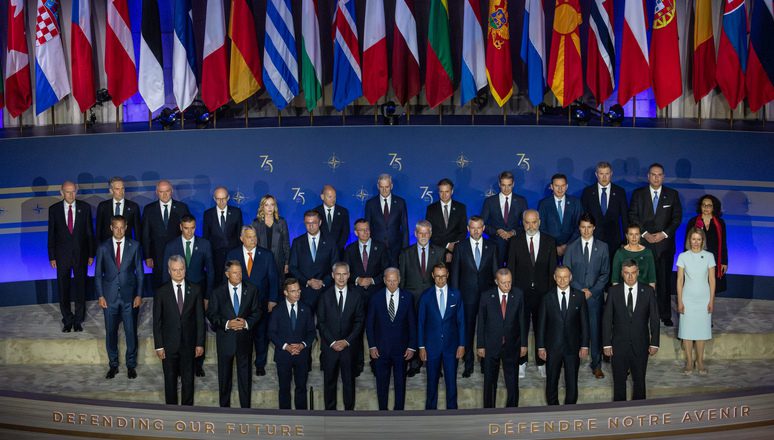
The enduring appeal of NATO membership isn’t tricky to understand when considering what the alliance offers. At its core, NATO provides something no individual nation can guarantee alone: ironclad security assurance backed by the world’s most powerful military alliance.
Article 5’s collective defence guarantee represents the ultimate security insurance policy. When a country joins NATO, it gains access to the combined military might of 32 nations, including the world’s most advanced nuclear arsenal. This deterrent effect has proven remarkably effective—no NATO member has ever been successfully invaded or conquered since joining the alliance.
Beyond the security guarantee, NATO membership offers substantial opportunities for military modernisation. New members gain access to NATO’s integrated command structure, standardised equipment protocols, and extensive training programs. This helps smaller nations punch above their weight militarily and ensures interoperability with allied forces.
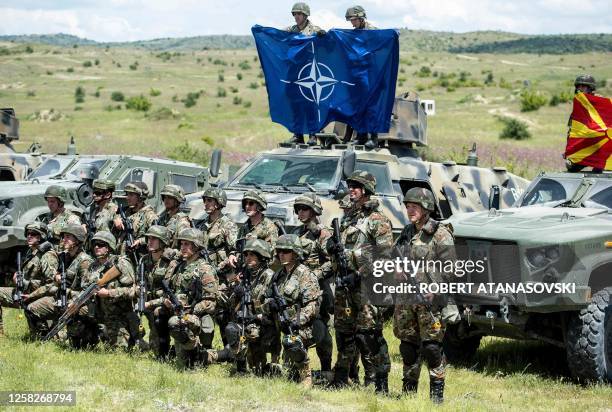
The economic benefits are equally compelling. NATO membership often coincides with EU membership eligibility, opening doors to massive economic opportunities. Defence contracts with major alliance partners can boost domestic industries, while NATO’s defence spending requirements often catalyse broader economic modernisation efforts.
Political legitimacy is another crucial factor. NATO membership serves as an international stamp of approval for democratic governance and the rule of law. For countries emerging from authoritarian rule, joining NATO represents a significant break with their past and a step toward integration into the Western community of democracies.
Intelligence sharing within NATO provides members access to some of the world’s most sophisticated surveillance and analysis capabilities. This intelligence cooperation extends beyond military threats to encompass terrorism, cyber warfare, and hybrid threats that individual nations would struggle to counter on their own.
The alliance’s crisis response mechanisms offer additional security benefits. NATO can rapidly deploy forces to defend members facing immediate threats, provide humanitarian assistance during natural disasters, and coordinate international responses to regional crises.
The Strategic Implications of NATO Expansion on Global Security
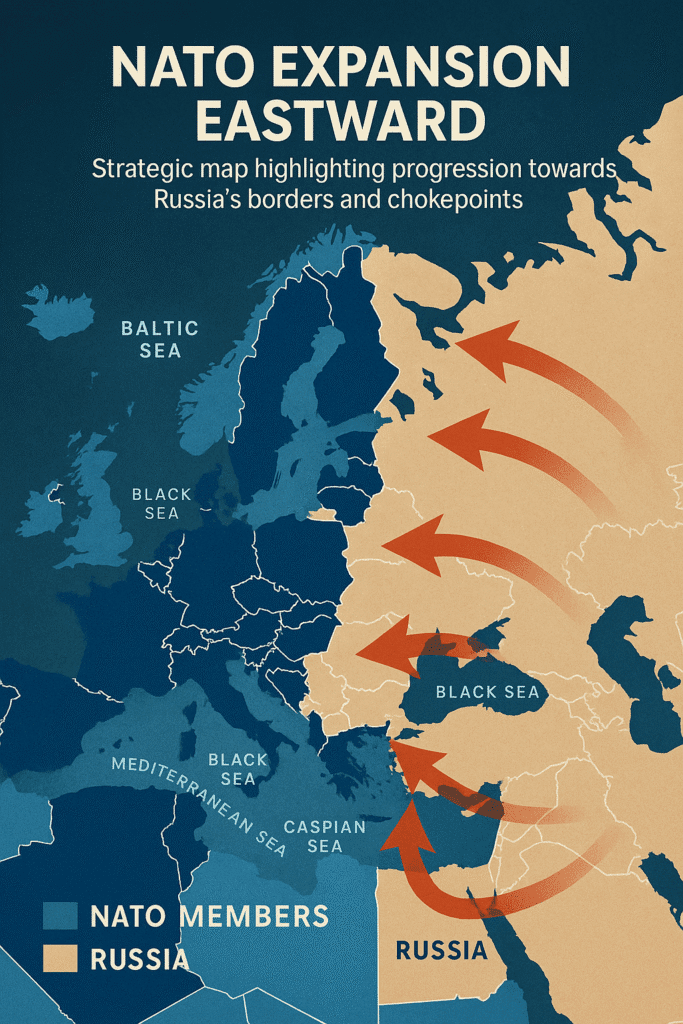
NATO expansion has fundamentally altered global security dynamics in ways that continue reverberating in 2025. The alliance’s eastward growth has created new strategic realities that affect everything from great power competition to regional stability across multiple continents.
The most obvious impact has been on Russia-West relations. Moscow views NATO expansion as an existential threat, arguing that the alliance’s growth violates verbal assurances allegedly made during German reunification negotiations. Whether these assurances existed remains disputed; however, Russian perceptions of encirclement have undoubtedly shaped Putin’s increasingly aggressive foreign policy.
Russia’s 2022 invasion of Ukraine can be partially understood through this lens—an attempt to prevent further NATO expansion by forcibly creating a buffer zone. The war has paradoxically accelerated NATO expansion, with Finland and Sweden abandoning neutrality to join the alliance they once viewed as unnecessarily provocative.
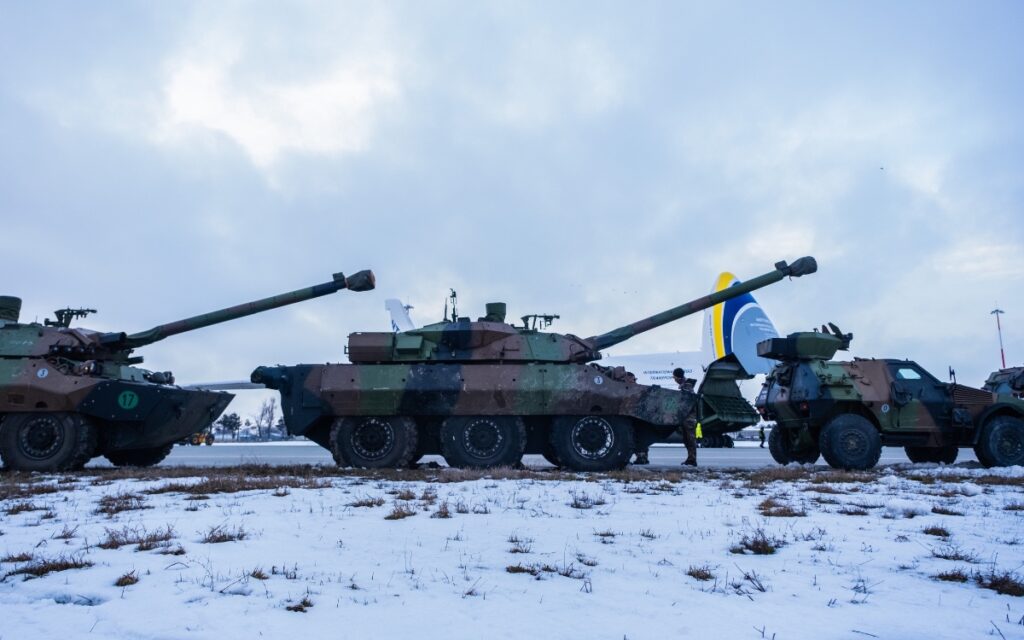
China has watched NATO expansion with growing concern, particularly as the alliance begins addressing Indo-Pacific challenges. Beijing views NATO’s “pivot to Asia” as part of a broader containment strategy, leading to deeper Sino-Russian cooperation and the formation of alternative security arrangements.
NATO expansion has also transformed the alliance’s mission beyond traditional territorial defence. Today’s NATO confronts hybrid warfare, cyber attacks, terrorism, and climate-related security challenges that the original founders never anticipated. This mission creep reflects both the expansion of capabilities and the reality that modern security threats don’t respect traditional boundaries.
The burden-sharing debate has intensified as NATO has grown. The United States has consistently pressured its European allies to increase defence spending, with the 2% of GDP target serving as a key benchmark. While more members now meet this target than ever before, significant disparities remain that create ongoing political tensions.
NATO expansion has created new vulnerabilities even as it has enhanced overall security. The alliance now must defend territories like the Baltic states, which are geographically isolated from the main NATO forces. This has necessitated new military strategies, including enhanced forward presence and rapid reinforcement capabilities.
Current NATO Expansion Candidates and Future Prospects
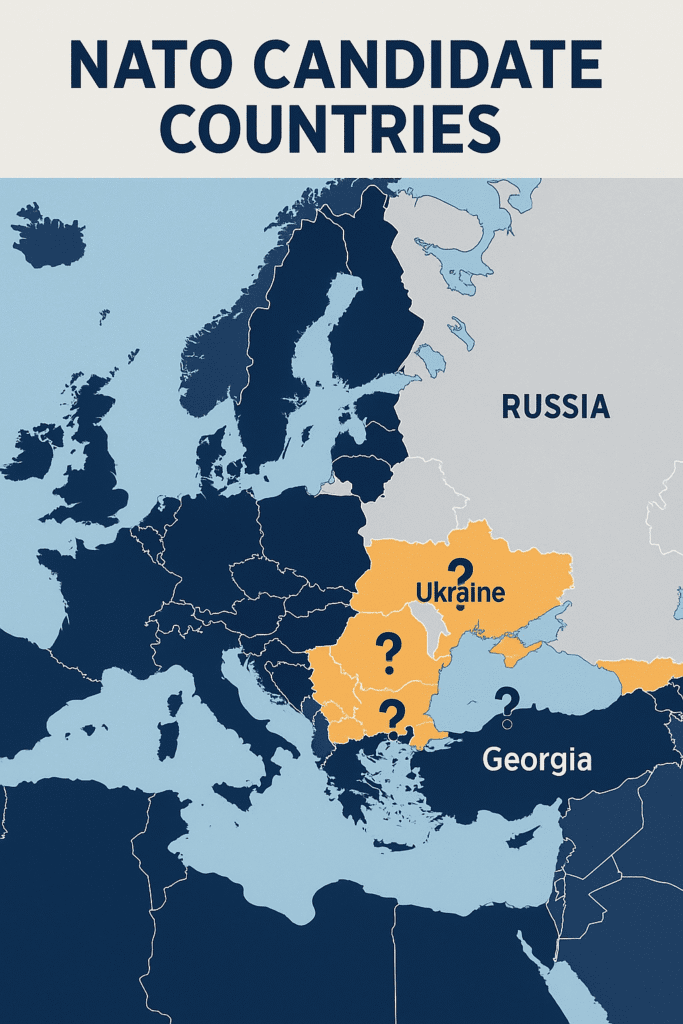
The next chapter of NATO expansion remains one of the most contentious issues in contemporary international relations. Several countries actively seek membership, but their paths to the alliance face significant political, military, and diplomatic obstacles that make their futures uncertain.
Ukraine represents the most prominent and complicated case. The country has sought NATO membership since the 2008 Bucharest Summit, where allies declared that Ukraine “will become” a NATO member without providing a timeline. Russia’s 2022 invasion has simultaneously strengthened Ukrainian resolve to join NATO while making membership practically impossible during active conflict.
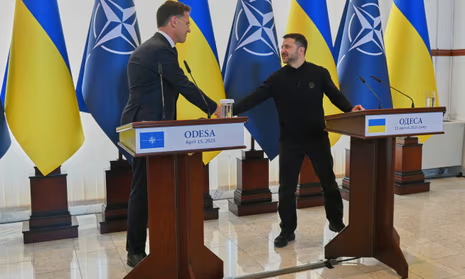
Ukrainian President Volodymyr Zelenskyy has made NATO membership a cornerstone of his country’s security strategy, arguing that only Article 5 guarantees can prevent future Russian aggression. However, NATO’s consensus-based decision-making means any member can block Ukrainian accession, and several allies remain reluctant to extend security guarantees that could drag them into direct conflict with Russia.
Georgia faces similar challenges stemming from its 2008 war with Russia. The country has implemented significant military and democratic reforms since then, but the Russian occupation of South Ossetia and Abkhazia creates legal and practical obstacles to NATO membership. Georgian forces have made significant contributions to NATO missions in Afghanistan and Iraq, demonstrating their commitment to the alliance’s values.
Bosnia and Herzegovina presents a different set of challenges. The country has been a potential NATO candidate since 2010; however, internal ethnic divisions and the need for constitutional reforms have slowed progress. The Membership Action Plan (MAP) process requires consensus among all ethnic groups—Bosniaks, Croats, and Serbs—a goal that remains elusive due to differing views on NATO membership.
Moldova has emerged as a dark horse candidate following Russia’s invasion of Ukraine. The country’s pro-European government has expressed interest in NATO membership, but constitutional neutrality requirements and the frozen conflict in Transnistria present significant hurdles.
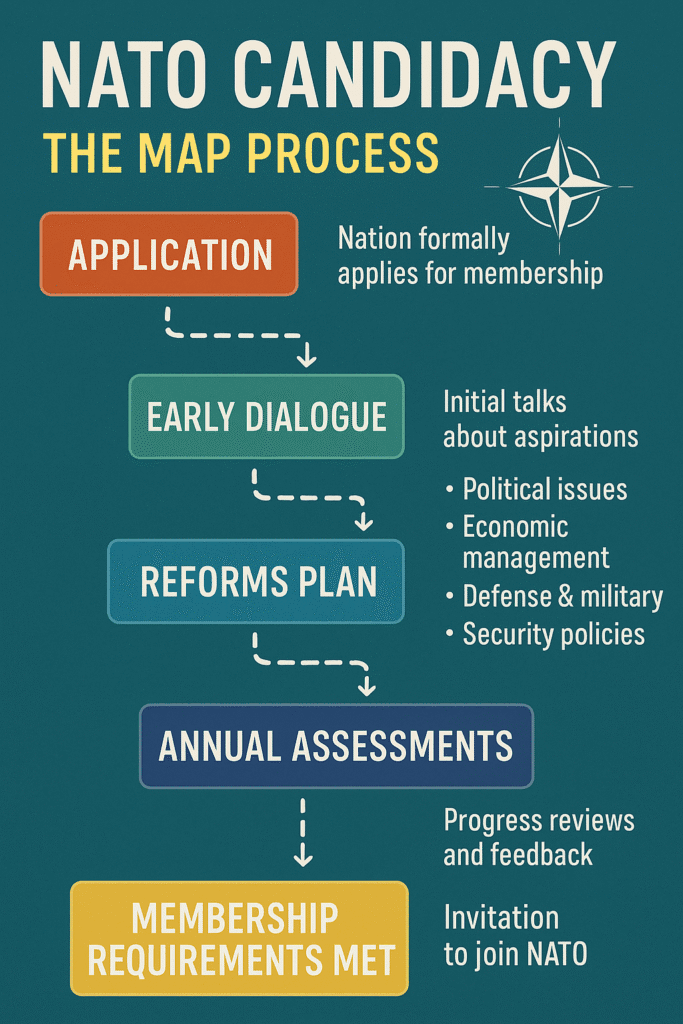
The timeframe for these expansions remains highly uncertain. Ukraine’s membership may depend on resolving its conflict with Russia, while Georgia and Bosnia face years of additional reforms. Even under the best circumstances, new NATO members typically require 5-10 years to complete the accession process from initial application to final ratification.
Challenges and Criticisms of NATO Expansion Policy
NATO expansion isn’t without its critics, both within member countries and internationally. These criticisms range from strategic concerns about overextension to fundamental questions about whether expansion enhances or undermines global security.
Russian security concerns top the list of criticisms. Moscow argues that NATO expansion violates the spirit of post-Cold War agreements and creates an artificial division of Europe into competing blocs. Russian officials contend that expansion forces them to take countermeasures, including military modernisation and closer ties with China, that ultimately make everyone less secure.
Some Western analysts share these concerns, arguing that NATO expansion has been unnecessarily provocative and counterproductive. They point to the deterioration in Russia-West relations since the 1990s as evidence that expansion has created more problems than it solved.
Within the alliance, expansion has created internal tensions about decision-making efficiency and strategic coherence. With 32 members, achieving consensus on controversial issues has become increasingly complex. Some established members worry that the threat perceptions and historical grievances of newer members could drag the alliance into unwanted conflicts.
The economic costs of expansion have also drawn criticism. Integrating new members requires significant investments in infrastructure, training, and equipment standardisation. These costs are typically borne disproportionately by wealthier members, creating resentment about burden-sharing that persists today.
Critics argue that NATO expansion has created unrealistic expectations among candidate countries while failing to address the root causes of regional instability. They point to ongoing conflicts in Georgia and Ukraine as evidence that promises of expansion without delivery can actually increase insecurity.
Alliance cohesion concerns have intensified as NATO has grown more diverse. Cultural differences, varying threat perceptions, and different historical experiences sometimes complicate unified responses to security challenges. The 2003 Iraq War highlighted these divisions, with newer members generally more supportive of U.S. positions than established European allies.
Some critics question whether NATO expansion primarily serves American interests rather than those of Europe. They argue that expansion extends U.S. influence while creating security dependencies that limit European strategic autonomy.
NATO Expansion’s Impact on Regional Security Dynamics
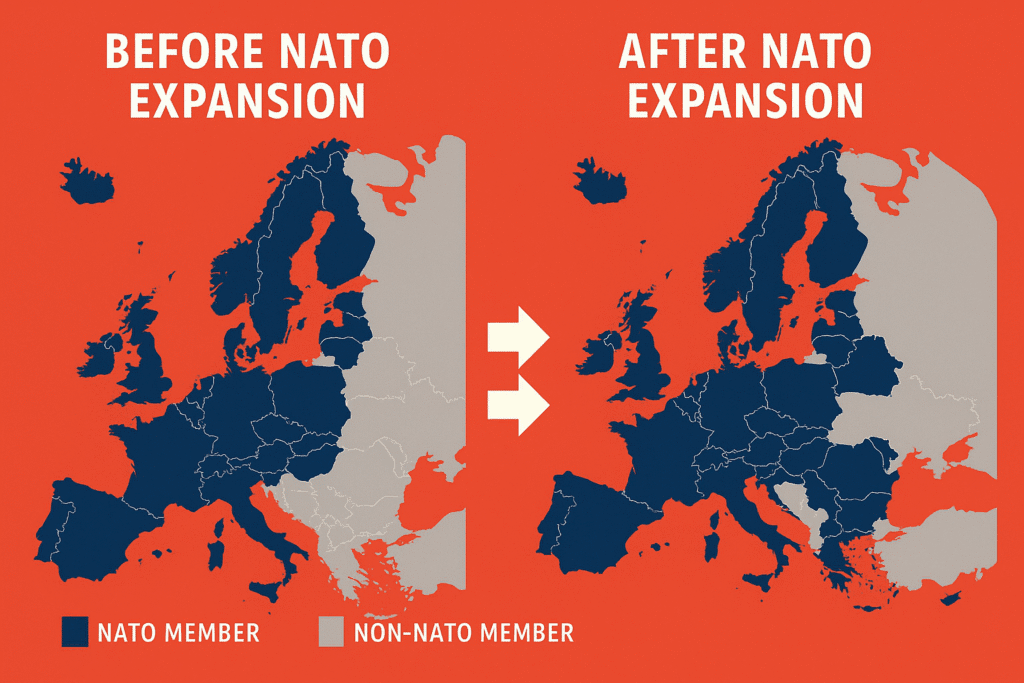
NATO expansion has fundamentally transformed regional security dynamics across multiple theatres, creating new patterns of cooperation and competition that continue evolving in 2025. These changes extend far beyond simple membership additions to encompass broader strategic realignments.
In Eastern Europe, NATO expansion has created an unprecedented zone of stability and prosperity. Countries that joined NATO in the 1990s and 2000s have generally experienced sustained economic growth, democratic consolidation, and military modernisation. Poland’s transformation from a struggling post-communist state to a regional power exemplifies this success story.
The Baltic states represent perhaps NATO’s most tremendous expansion success. Estonia, Latvia, and Lithuania have integrated seamlessly into Western institutions while maintaining their distinct cultural identities. Their experience demonstrates that small nations can thrive within the alliance framework while making meaningful contributions to collective security.
However, expansion has also created new vulnerabilities. The Baltic states and parts of Poland are geographically isolated from the main NATO forces, creating the so-called “Suwalki Gap” problem. This narrow corridor could be easily severed by Russian troops in a crisis. This has necessitated new military strategies and forward deployments that were unnecessary during the Cold War.
In the Western Balkans, NATO expansion has contributed significantly to regional stability. The alliance’s role in ending the Yugoslav wars and its subsequent expansion into the region has helped prevent new conflicts while promoting democratic development. Croatia’s successful integration and North Macedonia’s recent membership provide models for other Balkan nations.
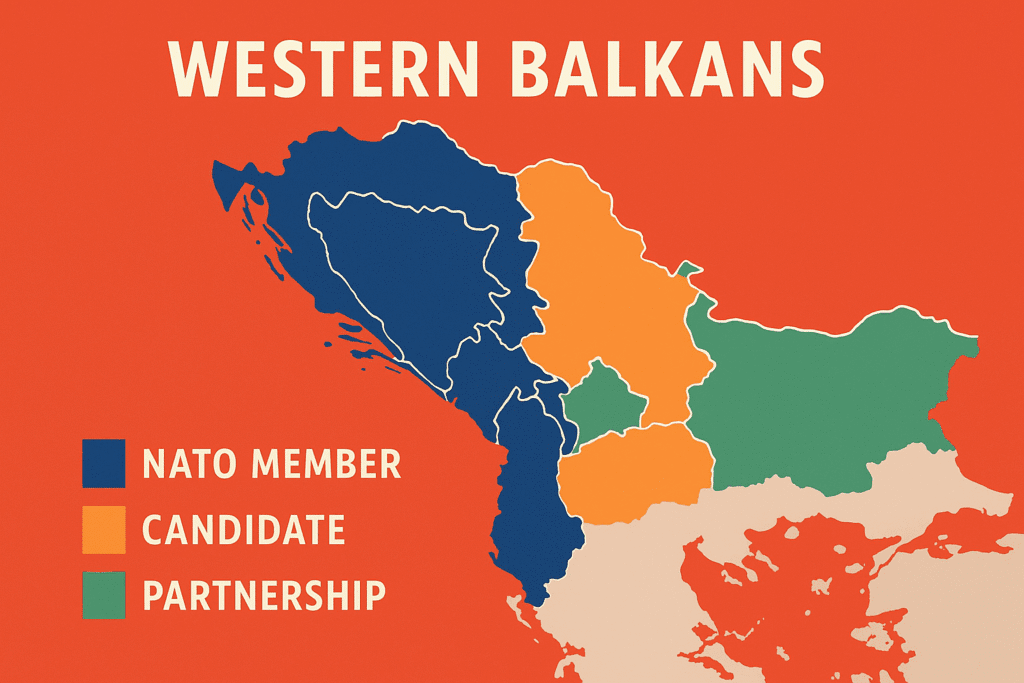
The Mediterranean dimension of NATO expansion has undergone significant evolution in response to shifting security challenges. Southern members now face threats from North Africa, including terrorism, migration pressures, and state failure. NATO’s expansion into Eastern Europe has sometimes diverted attention from these southern challenges, creating internal tensions over the allocation of priorities.
Arctic security has emerged as a new dimension of NATO’s expansion, particularly with the potential membership of Finland and Sweden. The Nordic expansion creates new opportunities for Arctic cooperation while potentially militarising a region that was previously largely peaceful.
Regional arms races have intensified in response to NATO expansion.
Russia has modernised its military capabilities and developed new weapons systems specifically to counter NATO expansion. This has created security dilemmas where defensive measures by one side appear offensive to the other.
The Future of NATO Expansion: Predictions for 2025-2030
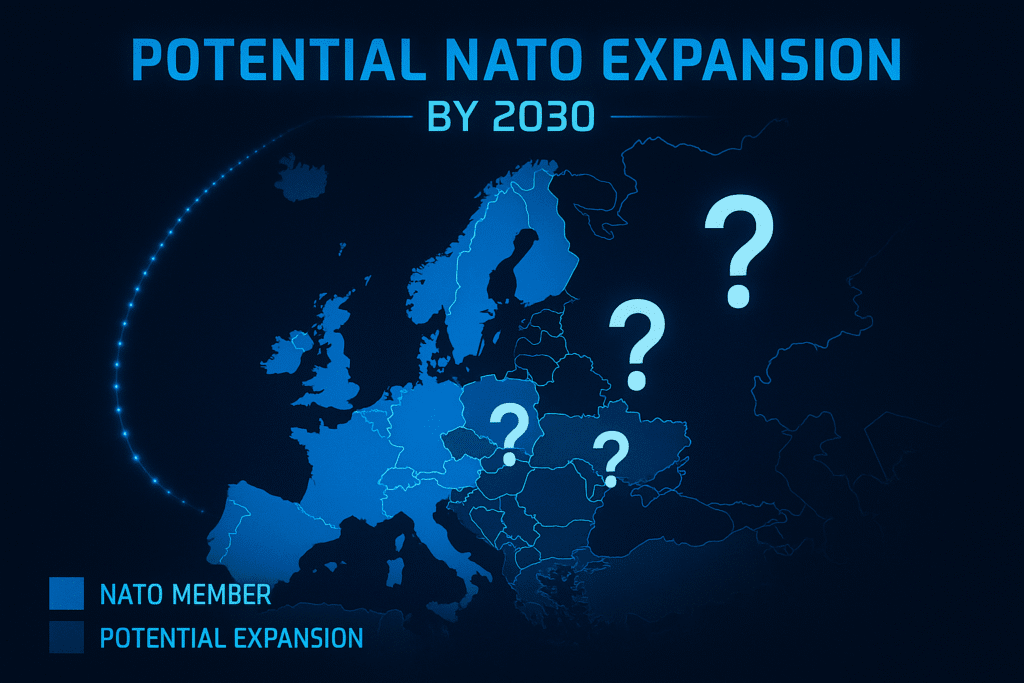
Looking ahead to 2030, NATO expansion is likely to continue, albeit at a more measured pace than in previous decades. The strategic environment, domestic political considerations, and evolving security challenges will shape which countries join and when they’re admitted to the alliance.
Ukraine’s membership trajectory remains the most consequential unknown. If the current conflict resolves favourably for Kyiv, Ukrainian NATO membership could become inevitable within 5 to 7 years. However, this scenario depends on variables beyond NATO’s control, including Russian political evolution and Ukrainian territorial integrity.
A more likely scenario involves gradual Ukrainian integration through enhanced partnership arrangements short of full membership. These might include security guarantees from individual NATO members, increased military cooperation, and accelerated defence modernisation programs that prepare Ukraine for eventual membership when conditions allow.
Georgia’s path to membership is more straightforward than Ukraine’s, despite its own territorial challenges. If Georgia continues to implement democratic reforms and build its military capabilities, it could achieve membership by 2028-2030, potentially with Russian-occupied territories initially exempt from Article 5 coverage.
Bosnia and Herzegovina’s membership timeline depends largely on internal political developments. Constitutional reforms required for NATO membership face significant domestic resistance, but external pressure and EU integration incentives may eventually overcome these obstacles.
Technological considerations will increasingly influence decisions regarding expansion. NATO’s focus on emerging technologies, cyber capabilities, and space-based assets may prioritise candidates who can contribute to these domains rather than simply offering geographic advantages.
Climate change will create new security challenges that influence expansion priorities. Countries with access to the Arctic, renewable energy resources, or strategic positions relative to climate-induced migration routes may become more attractive investment targets.
The alliance may also develop new categories of partnership or association that provide security benefits without full membership. These arrangements could offer alternatives for countries facing political obstacles to traditional accession while still contributing to collective security.
Great power competition with China and Russia will heavily influence expansion decisions through 2030. NATO may prioritise candidates who can contribute to competition in the Indo-Pacific or provide strategic depth against Russian threats.
Conclusion
NATO expansion remains one of the most consequential geopolitical phenomena of our time. What started as a 12-nation defence pact has evolved into a 32-member alliance that fundamentally shapes global security architecture!
From Sweden’s recent integration to Ukraine’s ongoing membership aspirations, we’ve seen how NATO expansion continues driving international relations in 2025. The alliance’s growth story reflects broader themes of democratic consolidation, collective security, and great power competition that define our current era.
The strategic implications of NATO expansion extend far beyond simple membership numbers. Each new member brings unique capabilities while also creating new obligations and vulnerabilities for the alliance. The eastward expansion has undeniably contributed to tensions with Russia, but it has also created unprecedented zones of stability and prosperity across Eastern Europe.
As we look ahead, NATO expansion will likely remain a central issue in global politics. Whether you’re following Ukraine’s prospects for membership or watching how new members integrate their defence capabilities, understanding these dynamics is crucial for anyone interested in international security.
The challenges facing NATO expansion—from debates over burden sharing to great power competition—reflect broader questions about how collective security arrangements adapt to changing strategic environments. Success will depend on maintaining alliance unity while managing the diverse interests and capabilities of an increasingly large and varied membership.
Ready to dive deeper into NATO’s strategic evolution? Stay informed about the latest developments in alliance expansion and their implications for your region’s security landscape. The future of global security may well depend on how effectively NATO navigates its next phase of growth and adaptation.



Yo, 747live-9! Been hitting it up lately and gotta say, the slots are fire! Seriously, I almost choked on my adobo when I hit that jackpot. Definitely worth checking out, my dudes! 747live-9
Yo, check out pk365game! Heard some good stuff about their platform. Might give it a whirl this weekend. What do you guys think? This is their site pk365game
12Vegas? Vegasnya di mana nih? Hahaha. Iseng aja deh main di sini. 12vegas
Been spinning the reels on hotlucky7s lately, and it’s not bad at all! Easy to pick up, and the potential for a decent win is definitely there. Perfect for a quick game after a long day. You can find it here: hotlucky7s
BJBaji88, what’s good? Giving this platform a thumbs up. Good selection of games and seem fair. Check it out bjbaji88.
Sup folks! jljl533 looks legit enough. Have a gander at jljl533
13wincon is pretty decent. Easy to get around the site. They’ve got some of my favorite slots. I’d recommend checking it out, see if you like it. Start here: 13wincon
288bet1 has some excellent promotions. I’d recommend going over there and having a look to see if anything takes your fancy. It’s worth checking out! 288bet1
I’ve been playing with 35win and I really like the fast payouts. I’ve not had a problem and I can’t recommend them enough! Let’s go: 35win
Just poking around 8betcasino. Nothing to lose, maybe something to win! 8betcasino
Gonna try my luck with 777sambaslots. The name caught my eye, let’s see if the games deliver. Feeling lucky! Just give it a try 777sambaslots.
Jlmk, huh? Just took a spin around jlmk.info. It’s alright, nothing groundbreaking, but it’s got a certain charm. If you’re curious, jlmk might be worth a peek!
Film app apk te permite instalar la aplicación en Android de forma rápida. Es ligera y fácil de usar. Puedes acceder a muchas películas y series sin pagar. Solo descarga el archivo, instala y empieza a disfrutar contenido entretenido sin complicaciones en tu dispositivo.