


Introduction
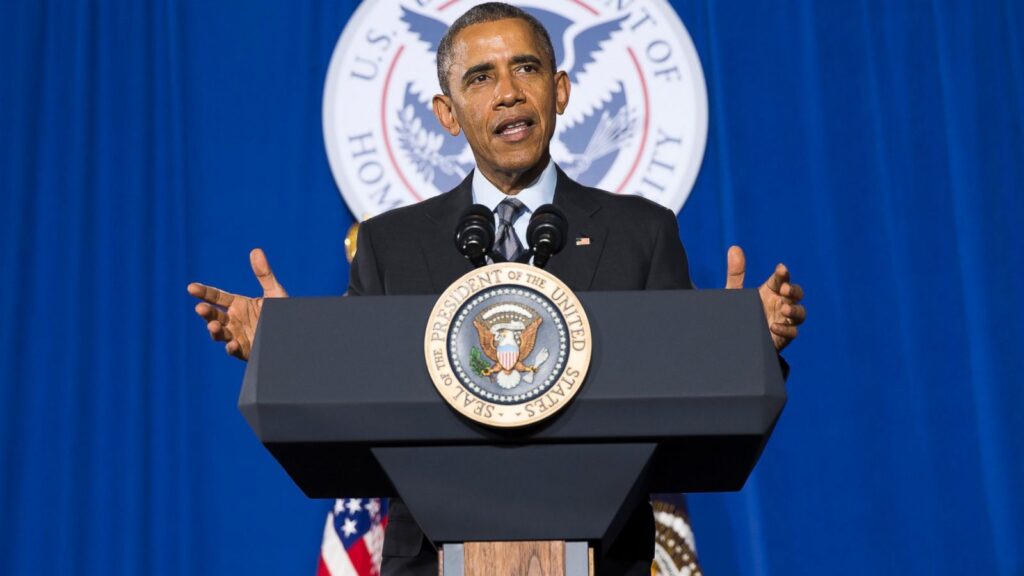
The relationship between former and current presidents—a delicate balance in American politics—has always been a significant aspect of our nation’s history. Recent political developments have once again brought to the forefront questions of presidential accountability, intelligence disputes, and the power of political rhetoric.
Understanding the intricate dynamics of presidential accountability, intelligence disputes, and the power of political rhetoric is not just about following the news cycle—it’s about being well-informed and actively engaged in the fundamental questions that have shaped American democracy since its founding. This understanding empowers us to hold presidents accountable, comprehend the role of political rhetoric in governance, and discern when disputes over intelligence and policy cross the line from legitimate disagreement to something more serious.

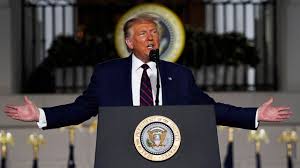
Obama Breaks Silence on Trump’s ‘Outrageous’ Call to Prosecute Him
Former president’s office issues unprecedented rebuke as current administration alleges attempted ‘coup’ in 2016 election
In an unprecedented move that breaks years of diplomatic silence, former President Barack Obama’s office has issued a rare and forceful response to President Donald Trump’s accusations of treason and election interference. The escalation marks a significant departure from the traditional post-presidential protocol of avoiding direct confrontation with sitting administrations.
The Allegations That Sparked the Response
The controversy erupted when Director of National Intelligence Tulsi Gabbard submitted a criminal referral to the Department of Justice, seeking to bring charges against Barack Obama, claiming the former president led a “treasonous conspiracy” to mislead the public on Russia’s role in the 2016 election.
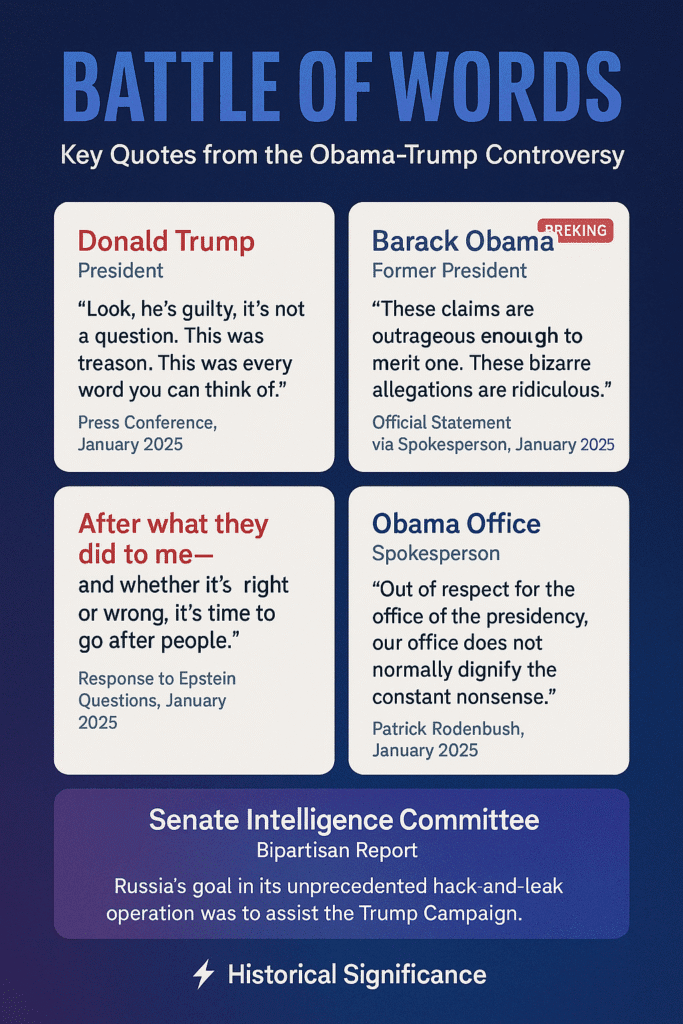
When questioned by reporters about unrelated matters involving Jeffrey Epstein, Trump pivoted to what he called Obama’s “criminality,” telling reporters: “After what they did to me — and whether it’s right or wrong, it’s time to go after people. Obama’s been caught directly. What they did in 2016 and 2020 is very criminal”.
Trump was unequivocal in his accusations, stating: “Look, he’s guilty. It’s not a question. This was treason. This was every word you can think of.. They tried to steal the election. They tried to obfuscate the election”.
Obama’s Unprecedented Response
Breaking with the traditional silence maintained by former presidents, Obama spokesperson Patrick Rodenbush issued a statement that read: “Out of respect for the office of the presidency, our office does not normally dignify the constant nonsense and misinformation flowing out of this White House with a response. But these claims are outrageous enough to merit one”.
The Obama office characterised the allegations as “a weak attempt at distraction” and called them “bizarre” and “ridiculous”. This marks the first time Obama’s post-presidential office has directly confronted Trump’s administration with such pointed language.
The Intelligence Community Claims

The current dispute centres on intelligence assessments from the 2016 election period. Gabbard alleges that on December 8, 2016, intelligence community officials prepared an assessment finding that Russia “did not impact recent U.S. election results” by conducting cyber attacks on infrastructure. Still, this assessment was “abruptly pulled ‘based on new guidance’ and never published”.
However, the Obama administration never claimed that Russian cyberattacks impacted the election results. Obama himself stated days after receiving the December 2016 brief: “I can assure the public that there was not the kind of tampering with the voting process that was of concern … the votes that were cast were counted — they were counted appropriately”.
Established Intelligence Findings
The Obama spokesperson’s response emphasised that “nothing in the document issued last week undercuts the widely accepted conclusion that Russia worked to influence the 2016 presidential election but did not successfully manipulate any votes. These findings were affirmed in a 2020 report by the bipartisan Senate Intelligence Committee, led by then-Chairman Marco Rubio.
The Senate Intelligence Committee’s bipartisan report was explicit about Russian intentions: “The Committee’s bipartisan Report found that Russia’s goal in its unprecedented hack-and-leak operation against the United States in 2016, among other motives, was to assist the Trump Campaign”.
Political Context and Timing
The timing of these allegations has drawn scrutiny from Democratic lawmakers. House Democratic Caucus Chair Pete Aguilar characterised the claims as “all a distraction,” suggesting “they’ll release anything if it buys them another day or two to not talk about Epstein”.
Senator Mark Warner criticised the intelligence community’s handling, stating: “This is just another example of the DNI trying to cook the books, rewrite history, and erode trust in the intelligence agencies she’s supposed to be leading”.
Breaking Presidential Precedent

The exchange represents a significant break from established norms where former presidents typically maintain public silence regarding their successors’ policies and statements. Obama’s decision to respond directly suggests the severity with which his office views these particular allegations.
Obama’s spokesperson noted they would “not normally dignify the constant nonsense” from the White House with a response, but these claims were “outrageous enough to merit one”.
Historical Context of the Russia Investigation
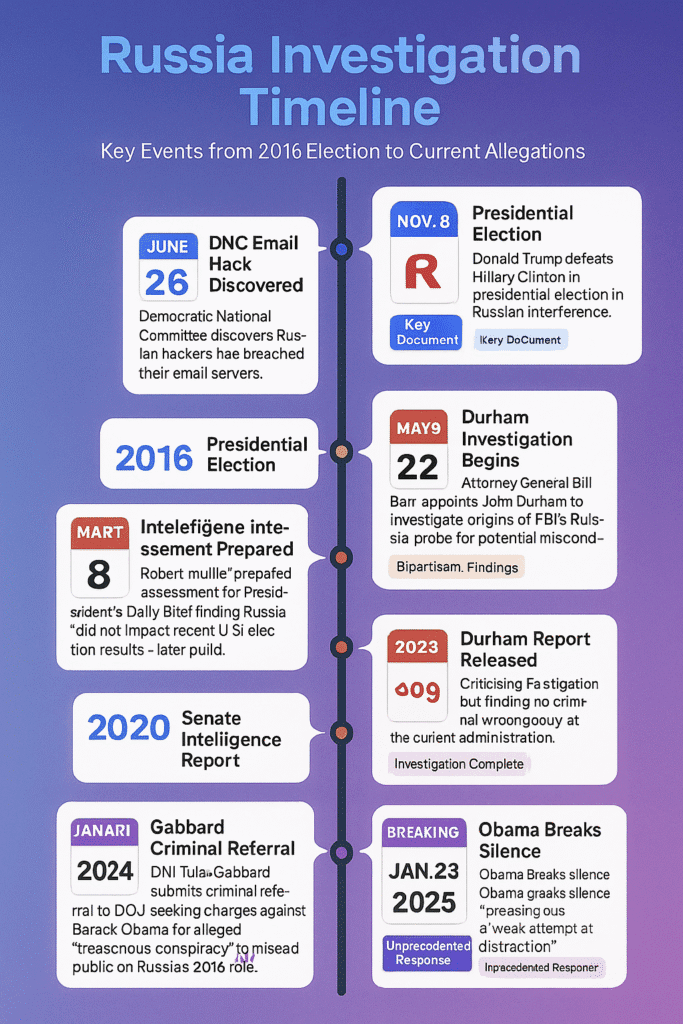
Multiple investigations have examined claims about the politicisation of Russia-related investigations. Special counsel John Durham’s report, appointed by then-Attorney General Bill Barr and championed by Trump, was “critical of the FBI’s handling of the probe” but found nothing “to the level of criminality now alleged by Trump”.
The current allegations represent Trump’s continued effort to challenge the conclusions of multiple investigations, including Robert Mueller’s special counsel investigation and the bipartisan Senate Intelligence Committee report, both of which found evidence of Russian interference aimed at helping Trump’s 2016 campaign.
The Framework of Presidential Accountability
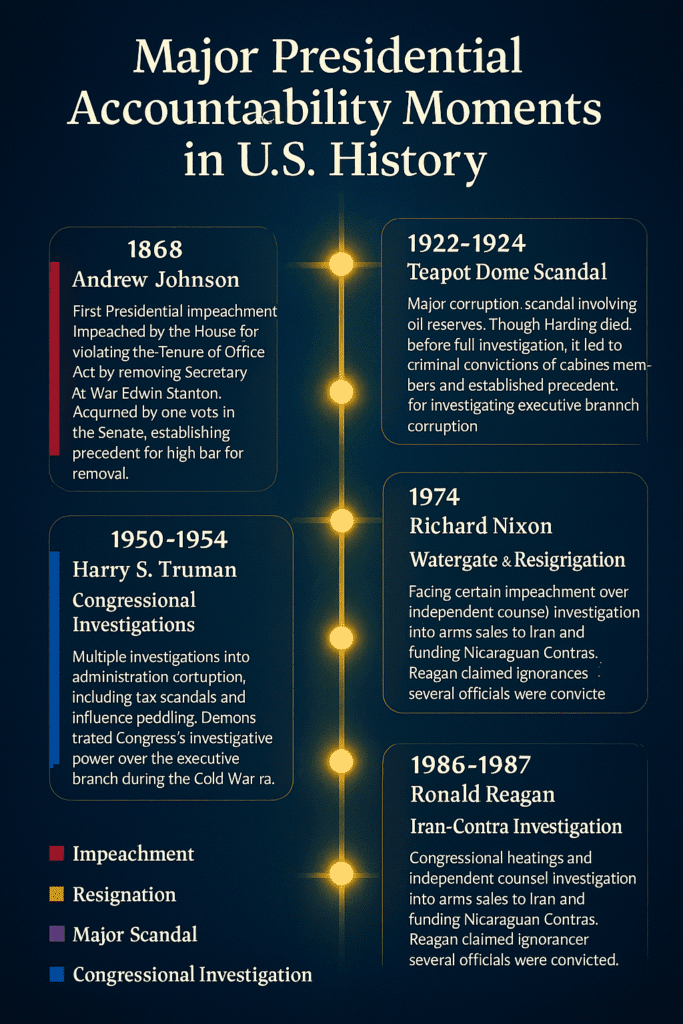
Presidential accountability operates on multiple levels in the American system. Unlike many other democracies, the United States has built-in mechanisms designed to prevent any single person, even the president, from wielding unchecked power.
Constitutional Safeguards
The Constitution provides several key mechanisms for accountability. Impeachment represents the most dramatic tool, allowing Congress to remove a president for “high crimes and misdemeanours.” However, this process is intentionally complicated, requiring a majority in the House and a two-thirds vote in the Senate.
Beyond impeachment, the separation of powers creates natural checks. Congress controls the budget and has the authority to investigate executive actions. The judiciary can review presidential decisions and declare them unconstitutional. These systems work together to create what the founders referred to as “checks and balances.”
Post-Presidential Accountability
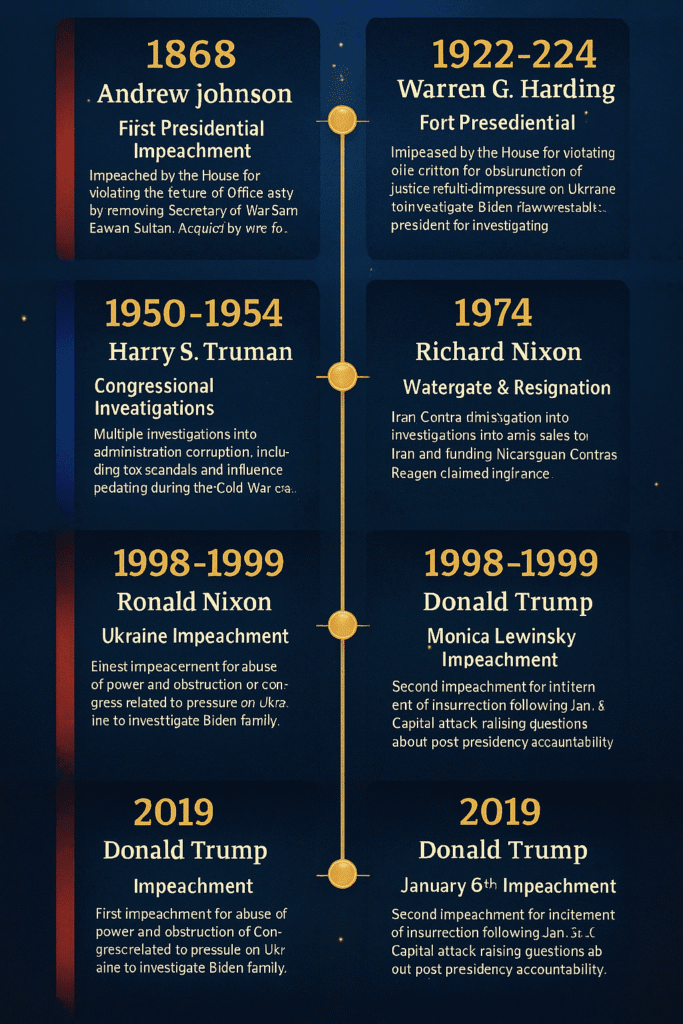
Once a president leaves office, they face different accountability measures. Former presidents can be prosecuted for crimes committed before, during, or after their presidency, though this remains a theoretical possibility in American history. Former presidents enjoy a kind of informal immunity from prosecution by their successors.
This tradition reflects both practical and philosophical considerations. Prosecuting former presidents could create a cycle of political retribution that undermines democratic norms. Yet it also raises questions about whether anyone is truly above the law in a democratic society.
Intelligence Disputes and Their Political Impact
Intelligence agencies occupy a unique position in the American government. They serve the current administration while maintaining institutional continuity across political transitions. This dual role creates inherent tensions, especially during periods of intense political polarisation.
The Nature of Intelligence Work
Intelligence assessment involves analysing incomplete information to draw conclusions about complex situations. Different analysts can reach different conclusions from the same data. This inherent uncertainty creates space for political interpretation and dispute.
When intelligence conclusions support or challenge particular political narratives, they become powerful tools in political debates. Both parties have historically used intelligence findings to support their positions, while questioning intelligence that contradicts their views.
Historical Precedents
Intelligence disputes have been a recurring feature in American politics. The claims about weapons of mass destruction before the Iraq War, for instance, led to lasting scepticism about intelligence conclusions. The 9/11 Commission also highlighted intelligence failures that transcended party lines. Even during the Cold War, different administrations interpreted Soviet intentions and capabilities differently, leading to significant intelligence disputes.
These historical examples demonstrate that intelligence disputes frequently reflect more profound disagreements over policy and priorities. When political stakes are high, intelligence becomes another battlefield in larger political conflicts. The implications of these disputes on policy decisions can be significant, as they can influence the direction of the country and the lives of its citizens.
The Power and Limits of Political Rhetoric
Political rhetoric serves multiple functions in democratic societies. It helps leaders communicate effectively with the public, frame issues clearly, and build support for their policies and initiatives. However, it can also escalate conflicts, undermine institutions, and polarise the electorate.
Rhetoric as a Political Tool
Effective political rhetoric simplifies complex issues and fosters emotional connections with its audience. Presidents throughout history have used strong language to rally support, criticise opponents, and justify their actions. This is a regular part of democratic politics.
However, presidential rhetoric carries special weight because of the office’s prominence and authority. When presidents make accusations or claims, they command attention and can shape public opinion in ways that other political figures cannot.
The Escalation Problem
Political rhetoric tends to escalate over time. What begins as a policy disagreement can evolve into personal attacks, then allegations of incompetence, and finally accusations of criminal behaviour or treason.
This escalation cycle can undermine public trust in institutions and democratic norms. The ‘escalation problem’ refers to this tendency of political rhetoric to become increasingly aggressive and damaging, posing a threat to the stability of democracy.
The challenge lies in distinguishing between legitimate political criticism and rhetoric that threatens democratic stability. While robust debate is essential to democracy, accusations that undermine the legitimacy of elections or democratic institutions can have lasting, harmful effects.
Institutional Trust and Democratic Norms
Democracy depends on institutional trust—the belief that government institutions will operate fairly and by established rules. As engaged citizens, your role in upholding these norms is not just crucial, but also a responsibility. When political leaders attack the legitimacy of institutions like intelligence agencies, courts, or election systems, they risk undermining this essential foundation, and it’s up to us to defend it.
The Fragility of Norms
Many aspects of American democracy depend on informal norms rather than formal rules. The peaceful transfer of power, the independence of law enforcement, and the nonpartisan nature of intelligence work all rely on shared understandings of appropriate behaviour.
These norms are fragile because they depend on voluntary compliance. When political leaders choose to break them, there may be few immediate consequences. However, the long-term damage to democratic functioning can be significant, and it’s crucial that we understand and act upon this potential harm to maintain the health of our democracy.
Rebuilding and Maintaining Trust
Institutional trust, once damaged, is challenging to rebuild. It requires consistent behaviour over time that demonstrates commitment to democratic values and processes. Leaders from both parties play crucial roles in modelling appropriate behaviour and respecting institutional boundaries.
The challenge is particularly acute during periods of intense political competition, when the temptation to use any available tool, including attacks on institutions, can be fierce.
The Role of Media and Public Discourse
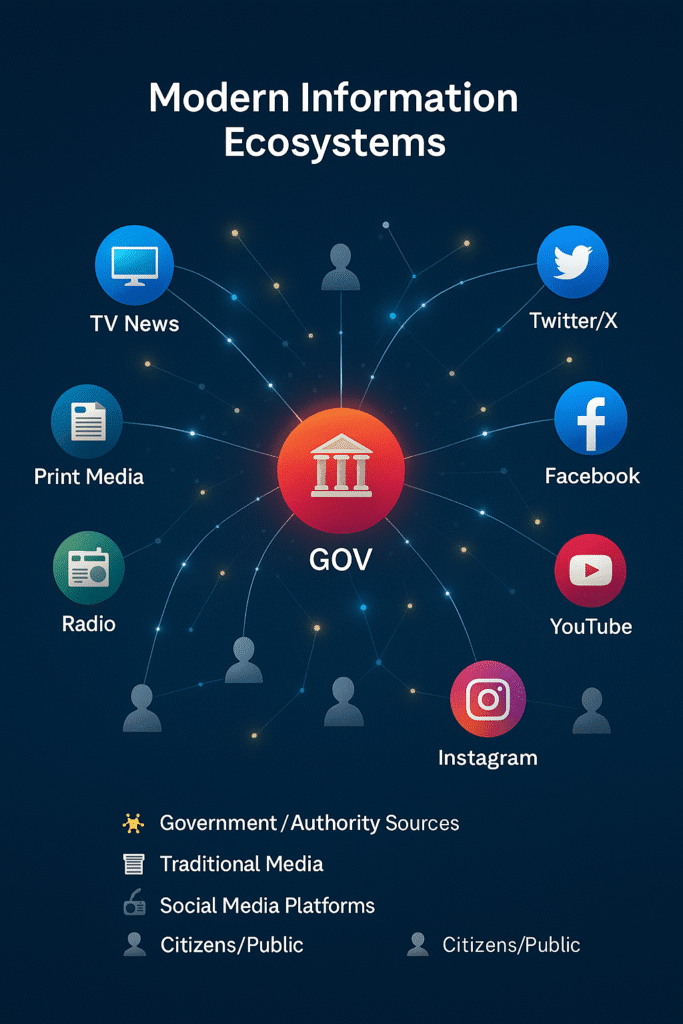
Modern media environments play a significant role in shaping political rhetoric and public discourse. Social media platforms, for instance, allow messages to spread rapidly and reach targeted audiences, while traditional media coverage can legitimise or delegitimise particular claims through their framing and fact-checking. The influence of media on political narratives and public opinion cannot be overstated.
Information Ecosystems
Different segments of the American public are increasingly consuming information from various sources, creating separate information ecosystems with their own facts and interpretations. This fragmentation makes it harder to build consensus around shared truths, including intelligence assessments and accountability questions. It also poses a significant challenge to promoting accountability and transparency in a polarised information landscape.
Political leaders can exploit these divided information environments by tailoring their messages to specific audiences while knowing that contrary evidence may not reach their supporters.
The Fact-Checking Challenge
Fact-checking has become more prominent as a response to disputed claims, but it faces limitations. Complex intelligence matters often involve classified information that cannot be publicly verified. Political claims may contain elements of truth while being misleading in context or implication.
Moreover, fact-checking can itself become politically charged when audiences view fact-checkers as biased or when political leaders attack the legitimacy of fact-checking organisations.
International Implications
American political disputes don’t occur in isolation. Foreign adversaries closely monitor internal American conflicts and may attempt to exploit them for their own purposes. When American leaders question the legitimacy of their own institutions, it can undermine American credibility and influence abroad.
Authoritarian Exploitation
Authoritarian governments often cite American political conflicts to justify their own actions and discredit American criticism of their behaviour. Internal disputes about intelligence agencies, elections, or presidential accountability provide material for these arguments.
This dynamic creates additional stakes for how American political leaders conduct their disputes. Beyond domestic political considerations, their rhetoric and actions can affect America’s ability to promote democratic values and maintain international alliances.
Looking Forward: Strengthening Democratic Resilience
Understanding these dynamics highlights several areas where American democracy can be strengthened to better address future disputes and challenges.
Institutional Reforms
Some experts propose formal changes to strengthen accountability mechanisms. These include clearer procedures for investigating former presidents, stronger protections for intelligence professionals, and reforms to reduce the politicisation of law enforcement.
However, institutional reforms alone cannot solve problems that stem from political choices and cultural changes. The most robust institutions can be undermined if political leaders choose not to respect them.
Cultural and Norm Changes
Ultimately, democratic resilience depends on shared commitment to democratic values among political leaders and the public. This includes accepting election results, respecting institutional independence, and distinguishing between legitimate political competition and attacks on democratic foundations.
Building this shared commitment requires ongoing effort from leaders, civic organisations, educational institutions, and citizens themselves. It cannot be taken for granted or achieved through any single reform or intervention.
Conclusion
The complex dynamics of presidential accountability, intelligence disputes, and political rhetoric reflect deeper tensions in American democracy. While these conflicts can seem unprecedented, they build on historical patterns and institutional challenges that have long existed in American politics.
Understanding these patterns enables us to evaluate current disputes with the appropriate context and perspective. Not every political conflict represents an existential threat to democracy, but the cumulative effect of norm-breaking and institutional attacks can be significant over time.
Moving forward, the health of American democracy will depend on the choices made by political leaders, institutions, and citizens. Will they choose to prioritise short-term political advantage or long-term democratic stability? Will they respect institutional boundaries and democratic norms, even when doing so is politically costly?
These questions don’t have easy answers, but they frame the stakes involved in contemporary political disputes. By understanding the broader context and implications, Americans can better evaluate the choices their leaders make and hold them accountable for the consequences—both immediate and long-term—of their actions.
The strength of American democracy has always depended on its ability to resolve internal conflicts without compromising its shared democratic values. Whether it can continue to do so in an era of intense polarisation and rapid change remains one of the defining challenges of our time.