


Introduction
What happens when an ancient Hindu temple becomes the flashpoint for modern warfare? That’s exactly what’s unfolding at Prasat Ta Muen Thom, where Thai F-16 fighter jets have attacked Cambodian army bases in July 2025, escalating a border dispute that threatens to destabilise Southeast Asia. This isn’t just another territorial squabble—it’s a conflict rooted in centuries of history, colonial cartography, and national pride that affects millions of people on both sides of the border.
The crisis has already forced Thailand to close 4 border checkpoints and 2 castles indefinitely, while diplomatic relations have been downgraded to their lowest point in decades. For travellers, historians, policymakers, and anyone trying to understand Southeast Asian geopolitics, the story of Prasat Ta Muen Thom offers crucial insights into how ancient heritage sites can become modern battlegrounds.
The Sacred History of Prasat Ta Muen Thom: A Testament to Southeast Asia’s Rich HeritageAn 11th-Century Hindu Marvel
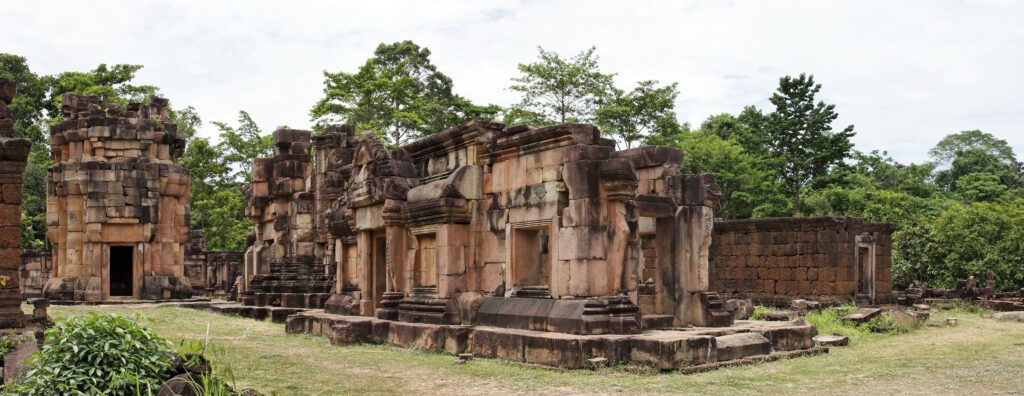
Built in the 11th century during the reign of King Udayadityavarman II, Prasat Ta Muen Thom was a Hindu temple dedicated to Shiva and served as a vital component of the mighty Angkor Empire’s infrastructure. Its Khmer name, ‘Prasat Ta Muen Thom’, translates literally to ‘Great Temple of Grandfather Chicken’, a name that holds deep cultural significance in the Khmer tradition. However, this quirky translation belies its profound spiritual significance.
The temple wasn’t just a place of worship—it was a strategic waystation. Prasat Ta Muen Thom was a notable feature along the ancient Royal Road, which led from Angkor to Phimai (in present-day Thailand), making it a crucial link in the Khmer Empire’s extensive network of communication and commerce routes.
Architectural Significance and Sacred Elements

What makes Prasat Ta Muen Thom architecturally extraordinary? The temple complex showcases the pinnacle of Khmer Hindu architecture:
• Central Sanctuary: A towering prang (tower) symbolising Mount Meru, the centre of Hindu cosmology
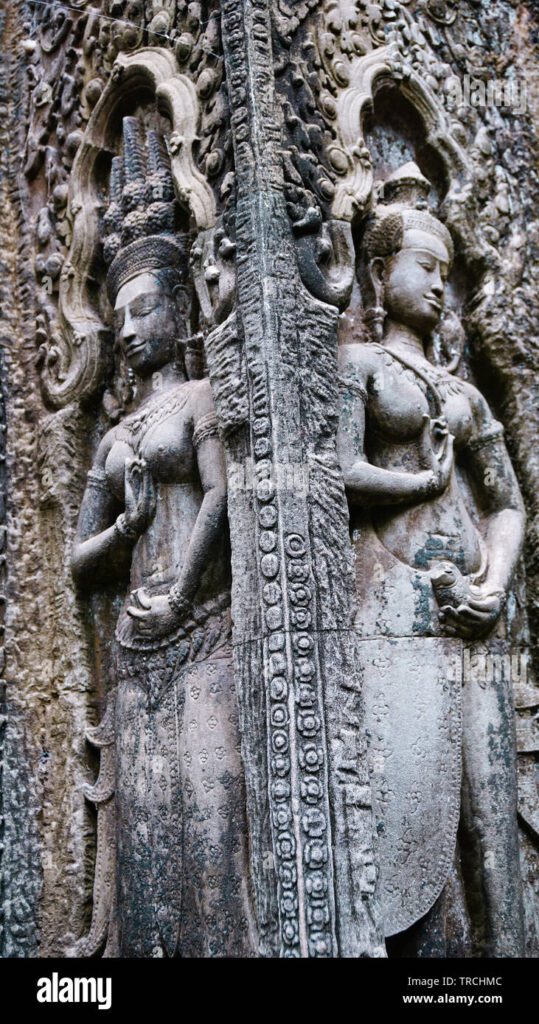
• Sandstone Mastery: Intricate carvings depicting Hindu mythology, with lintels and pediments that rival Angkor Wat’s artistry
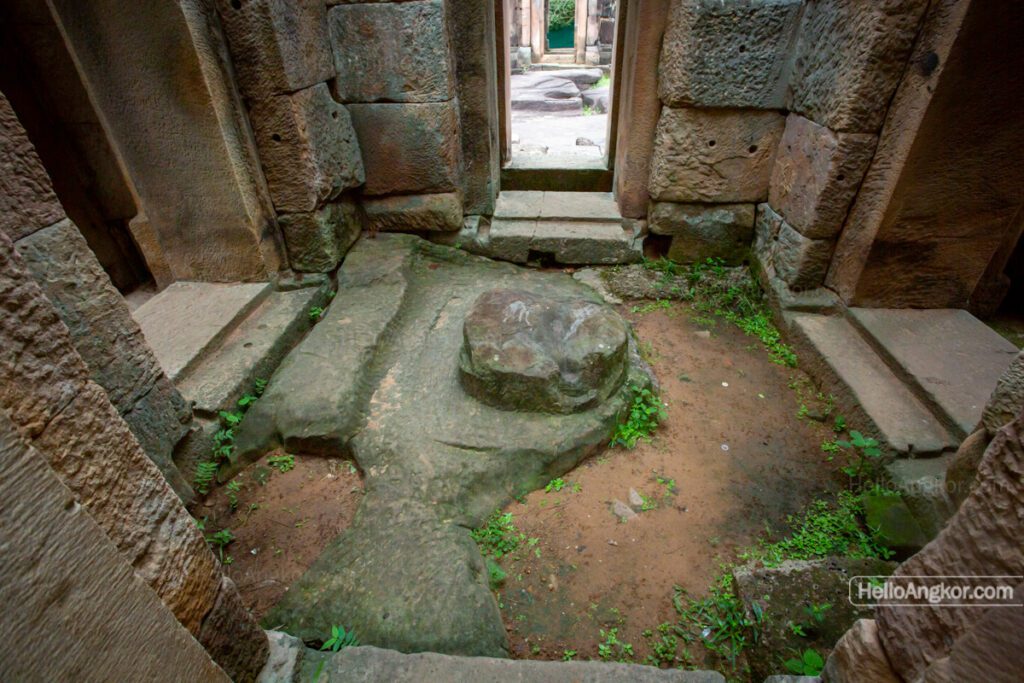
• Sacred Linga: The temple houses a rare Svayambhuva Linga—a naturally formed sacred phallus that represents Lord Shiva’s creative power
• Strategic Location: Positioned on a mountain pass through the Dangrek Mountains, offering both spiritual elevation and tactical advantage
The temple complex actually consists of three related structures: Prasat Ta Muen Thom (the main temple), Prasat Ta Muen Toch (the hospital chapel), and Prasat Ta Muen (a rest house chapel), creating a comprehensive religious and administrative centre.
Understanding the Current Thailand-Cambodia Border Dispute
What Sparked the 2025 Crisis?
The current crisis didn’t emerge overnight. Tensions have soared between the two South East Asian nations as nationalist fervour and a political fracas fuel a longstanding border dispute. But what transformed simmering tensions into active warfare?
The immediate trigger came in May 2025, when Cambodia filed a lawsuit with the International Court of Justice (ICJ), claiming ownership of Prasat Ta Muen Thom, two other Khmer temples, and the Emerald Triangle, an area known for its rich biodiversity and potential mineral resources. Thailand’s firm rejection of these claims set the stage for escalation.
Timeline of Escalation
May 2025: Cambodia initiates ICJ proceedings to claim sovereignty over Prasat Ta Muen Thom.
June 2025: Thailand’s military gathers ‘worrisome’ indications, such as increased troop movements and fortifications, suggesting that Cambodia has stepped up its military readiness, including the deployment of additional troops and the construction of new military installations.
July 13, 2025: A Thai tourist attacked a Cambodian soldier by punching him before running away, further inflaming tensions.
July 23, 2025: Thailand downgraded diplomatic ties with Cambodia after the landmine incident.
July 24, 2025: Active military clashes begin, with both sides claiming the other was the aggressor
The Human Cost and Regional Impact
This isn’t just a diplomatic spat—real people are suffering real consequences. The border closure affects:
• Local Communities: Families separated across borders, with traditional trade routes severed
• Tourism Industry: A significant economic pillar for both countries, facing massive losses
• Regional Stability: ASEAN’s credibility as a peace-maintaining organisation is being tested
• Cultural Heritage: Ancient temples becoming military targets, risking irreversible damage to world heritage
Why This Temple Matters More Than You Think

The Colonial Cartography Problem
The root of today’s conflict lies in colonial-era mapmaking. When French colonists drew borders in the early 20th century, they created ambiguous boundary lines that have plagued the region ever since. Prasat Ta Muen Thom is situated in a densely forested area, where access is difficult due to one of the passes through the Dangrek Mountains, making precise territorial demarcation nearly impossible.
Economic and Strategic Implications
The dispute over Prasat Ta Muen Thom isn’t just about historical pride—it has serious economic ramifications:
• Trade Routes: The temple sits on crucial trade passages between the two countries
• Tourism Revenue: Both nations claim the lucrative heritage tourism market
• Natural Resources: The disputed area may contain valuable minerals and timber
• Geopolitical Positioning: Control influences broader regional power dynamics
Cultural and Religious Significance
For millions of Hindus and Buddhists across Southeast Asia, Prasat Ta Muen Thom represents more than stones and carvings. It’s a tangible link to the golden age of the Khmer Empire, when Hindu-Buddhist culture flourished across the region. The temple’s disputed ownership strikes at the heart of national identity and cultural heritage for both Thailand and Cambodia.
What the International Community Is Doing
Diplomatic Efforts and International Law
The International Court of Justice now faces one of its most complex territorial disputes. Unlike previous cases involving clear colonial-era treaties, the Thailand-Cambodia border was never definitively settled by international agreement. This creates a legal puzzle that could take years to resolve.
ASEAN, Southeast Asia’s primary diplomatic organisation, finds itself in an awkward position. The bloc’s principle of non-interference conflicts with the need to prevent military escalation between two member states.
Media Coverage and Global Attention
International media outlets have begun paying serious attention to what was once considered a local border skirmish. Major publications, such as TIME magazine, are now covering the dispute, bringing global scrutiny to both governments’ handling of the crisis.
Impact on Tourism and Cultural Preservation
Tourism Industry in Crisis
Before the 2025 conflict, the temple provided visitors with a unique opportunity to explore a less-crowded historical site, offering stunning views of the surrounding landscape. Now, with military checkpoints and active conflict, tourism has ground to a halt.
The economic impact extends far beyond the immediate border area:
• Hotel bookings cancelled across both countries
• Tour operators facing bankruptcy
• Local guides and cultural interpreters are losing their livelihoods
• International travellers are avoiding the entire region.
Preserving Heritage Under Fire
The temple has been restored by Thailand’s Fine Arts Department, with artefacts displayed at the Surin National Museum. However, active military operations near the site threaten decades of conservation work. Ancient sandstone is particularly vulnerable to vibrations from military equipment and explosions.
What This Means for You: Practical Implications
For Travellers and Tourists
If you’re planning to visit Southeast Asia, the Prasat Ta Muen Thom dispute affects you directly:
• Safety Concerns: Avoid the immediate border region until tensions de-escalate.
• Alternative Destinations: Consider visiting other Khmer temples like those at Phimai or Phanom Rung in Thailand.
• Travel Insurance: Ensure your policy covers conflict-related disruptions
• Stay Informed: Monitor diplomatic developments before finalising travel plans
For Businesses and Investors
Companies operating in Thailand and Cambodia face new uncertainties:
• Supply chain disruptions due to closed border crossings
• Currency volatility as markets react to geopolitical tensions
• Increased due diligence requirements for cross-border investments
• Potential sanctions or trade restrictions if the conflict escalates.
For Students and Researchers
The crisis offers essential lessons for academics studying:
• International law and territorial disputes
• Cultural heritage preservation in conflict zones
• ASEAN diplomacy and regional security
• The intersection of nationalism and historical memory.
Looking Ahead: Possible Resolutions and Future Scenarios
Diplomatic Solutions
Several pathways could lead to de-escalation:
• ICJ Arbitration: Both nations could agree to binding international arbitration
• Joint Heritage Management: Creating a UNESCO-style shared heritage site
• Economic Cooperation: Developing the area as a joint tourism destination
• Track II Diplomacy: Academic and cultural exchanges to reduce nationalism
Worst-Case Scenarios
Without diplomatic intervention, the conflict could spiral into:
• Full-scale military confrontation affecting the entire border region
• Collapse of ASEAN’s conflict prevention mechanisms
• International sanctions impacting both economies
• Irreversible damage to ancient temples and cultural sites.
The Role of Civil Society
Local communities, religious leaders, and cultural organisations on both sides are calling for a peaceful resolution. Their voices often go unheard amid governmental posturing, but grassroots pressure could prove decisive in finding compromise solutions.
Conclusion: Why Prasat Ta Muen Thom’s Fate Matters to Us All
The ancient stones of Prasat Ta Muen Thom have witnessed centuries of change—from Hindu kingdoms to Buddhist empires, from colonial rule to modern nation-states. Today, this 11th-century temple stands at the centre of a 21st-century crisis that threatens regional stability and cultural heritage.
The dispute reveals how deeply historical memory and national identity intertwine with contemporary geopolitics. It shows us that in our interconnected world, a border skirmish in Southeast Asia can disrupt global supply chains, tourism patterns, and diplomatic relationships far beyond the immediate region.
Most importantly, the Prasat Ta Muen Thom crisis reminds us that cultural heritage sites aren’t just tourist attractions or archaeological curiosities—they’re living symbols of human achievement that deserve protection, regardless of which flag flies over them. As this ancient temple sits in the crossfire of modern conflict, its fate will test our collective commitment to preserving the past while building a peaceful future.
Whether you’re planning a trip to Southeast Asia, investing in the region, or simply trying to understand today’s complex world, the story of Prasat Ta Muen Thom offers crucial insights into how history shapes our present and future. The question now is whether wisdom will prevail over warfare, and whether this sacred site will survive to inspire future generations.