
Introduction
The evolving China-Pakistan strategic partnership, underscored by recent high-level military exchanges and significant regional developments, has emerged as a pivotal force in South Asian geopolitics. As global powers vie for influence across Asia, the deepening ties between Beijing and Islamabad are reshaping regional security calculations and challenging traditional alliance structures.
Pakistan Army Chief’s Strategic Beijing Visit: Strengthening Military Cooperation
High-Level Diplomatic Engagement
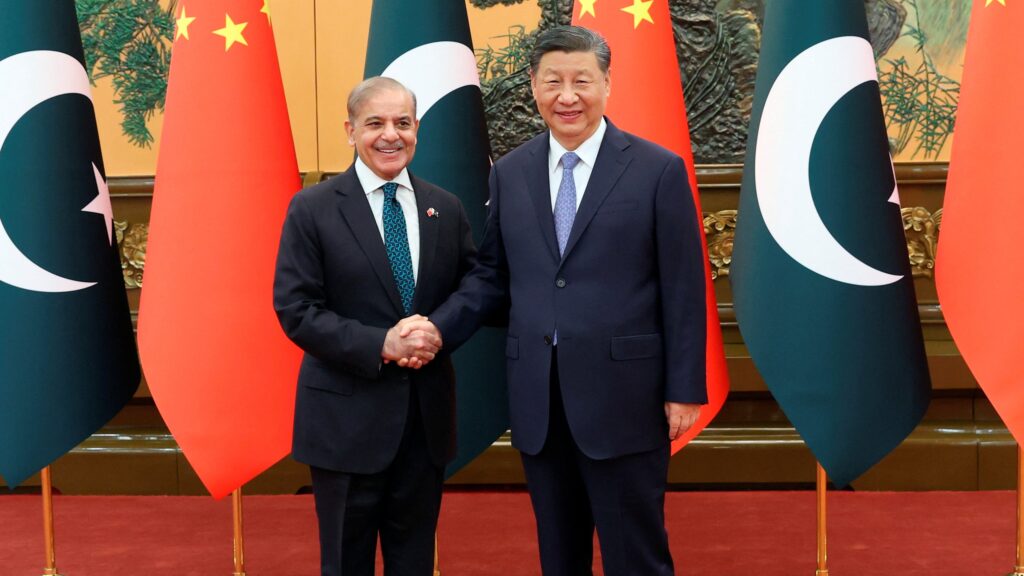
Pakistan Army Chief General Asim Munir recently completed an official visit to China, where he held a series of high-level meetings with Chinese military leadership. This visit represents a significant milestone in China-Pakistan military cooperation, demonstrating Beijing’s commitment to supporting its “all-weather strategic partner.”
During the meetings, both sides emphasized cooperation on military, economic, and geopolitical fronts, amid recent military engagements with India. The timing of this visit is particularly noteworthy, coming at a moment when regional tensions have escalated following border conflicts between India and Pakistan.
China’s Message: “Protect Our People”
In a remarkable show of solidarity, China has made clear its commitment to Pakistan’s security. As highlighted in the transcript, China’s message to Pakistan’s military chief was unprecedented: “Protect our people” – a statement that underscores the depth of the China-Pakistan relationship and Beijing’s willingness to extend security guarantees to its South Asian ally, not referring to Chinese citizens, but to Pakistanis.
Military and Strategic Implications
During the 2025 India-Pakistan conflict, 44 Chinese satellites were made available to Pakistan, according to diplomatic sources involved in ceasefire negotiations. This intelligence sharing demonstrates the operational depth of China-Pakistan military cooperation and Beijing’s direct involvement in regional security matters.
The partnership extends beyond symbolic gestures to concrete military assistance:
- Advanced satellite intelligence sharing during conflicts
- Military technology transfers and joint defense initiatives
- Strategic planning coordination between defense establishments
- Training programs for Pakistani military personnel
Regional Power Dynamics: The Thailand-Cambodia Border Crisis
US-China Proxy Tensions in Southeast Asia
The ongoing border conflict between Thailand and Cambodia has become a focal point for US-China competition in Southeast Asia. Thailand, a long-standing US ally with American-trained military forces, faces off against Cambodia, which has increasingly close ties with China and has granted Chinese naval access to bases.
Strategic Alignments
The conflict reveals the complex web of regional alliances:
Thailand’s Western Orientation:
- Major non-NATO ally status with the United States
- American-made F-16 jets in Thai air force
- Regular docking of US warships in Thai ports
- Military training partnerships with American forces
Cambodia’s Chinese Alignment:
- Chinese navy access to a naval base on the Gulf of Thailand
- Beijing’s infrastructure investments through Belt and Road Initiative
- Military equipment supplies from China
- Growing economic dependence on Chinese investment
Geopolitical Implications
Experts note that “the U.S. really doesn’t have the influence anymore on Thailand,” challenging the notion of Thailand as a reliable US proxy. This shift reflects broader changes in Southeast Asian alignments, where countries increasingly pursue hedging strategies between great powers.
The border crisis has exposed the limitations of both superpowers’ influence:
- Despite US mediation efforts and trade deal threats, clashes continued for multiple days
- China’s restraint in directly intervening despite its close Cambodia ties
- Both powers’ preference for diplomatic solutions over military involvement
The Broader Strategic Context
China’s South Asian Strategy
Beijing’s approach to South Asia reflects a comprehensive strategy to:
- Counterbalance Indian influence through strong partnerships with Pakistan, Sri Lanka, and Myanmar
- Secure trade routes through the China-Pakistan Economic Corridor (CPEC)
- Project naval power in the Indian Ocean through port access agreements
- Create strategic depth against potential US containment efforts
US Response and Regional Realignments
Washington’s South Asian strategy faces several challenges:
- Declining influence over traditional allies like Thailand
- Complex relationships with countries pursuing multi-alignment policies
- Need to balance India partnership with broader regional engagement
- Competition with China’s economic incentives and infrastructure investments
Economic Dimensions of China-Pakistan Cooperation
The China-Pakistan Economic Corridor (CPEC), part of China’s Belt and Road Initiative, represents the economic backbone of bilateral cooperation:
- Infrastructure Development: Ports, highways, railways, and energy projects worth over $60 billion
- Trade Integration: Facilitating Chinese access to Middle Eastern and African markets through Gwadar Port
- Industrial Cooperation: Joint manufacturing initiatives and technology transfers
- Financial Assistance: Chinese loans and investments supporting Pakistan’s economic development
Future Implications and Regional Outlook
Challenges and Opportunities
The deepening China-Pakistan partnership presents both opportunities and challenges:
Opportunities:
- Enhanced regional connectivity through CPEC
- Economic development and infrastructure modernization
- Strengthened deterrence against regional threats
- Increased South-South cooperation
Challenges:
- Potential debt dependency concerns
- Balancing relationships with other major powers
- Managing tensions with neighboring countries
- Ensuring sustainable economic development
Impact on Regional Security Architecture
The evolving China-Pakistan partnership is reshaping South Asian security dynamics:
- Multipolar Balance: Moving away from US-dominated regional order
- Alliance Networks: Formation of new strategic partnerships and alignments
- Conflict Prevention: New mechanisms for managing regional disputes
- Economic Integration: Trade and investment as tools of strategic influence
Conclusion
The China-Pakistan strategic partnership represents a fundamental shift in South Asian geopolitics, with implications extending far beyond bilateral relations. As both countries commit to enhancing connectivity and cooperation, their alliance is becoming a cornerstone of a new regional order that challenges traditional power structures.
The ongoing Thailand-Cambodia border crisis further illustrates how great power competition plays out through regional proxies, with the US and China competing for influence in fast-growing Southeast Asia. As these dynamics continue to evolve, the China-Pakistan partnership will remain a critical factor in shaping regional stability, economic development, and strategic alignments across Asia.
Understanding these relationships is crucial for policymakers, analysts, and businesses operating in the region, as the traditional post-Cold War order gives way to a more complex, multipolar system where middle powers play increasingly important roles in shaping regional outcomes.
Stay updated on the latest developments in Asia-Pacific geopolitics and strategic partnerships by following our comprehensive coverage of regional security dynamics.




BK888slot, another slots site. Gotta be careful with these. Always read the terms and conditions and don’t gamble more than you can afford. Good luck if you give it a shot: bk888slot
Word on the street is f8beta2con is up-and-coming! The design feels really modern. Give it a try and see if you will like the games: f8beta2con
The fb77705download was quick and easy. No problems at all. Ready to play now! Download location here: fb77705download.
Win88apps, downloading now, hoping to win! Wish me luck, guys! Try those apps: win88apps
Yo, anyone using the 356betapp? How’s the mobile gaming experience? Smooth? Reliable? Let me know if it’s worth downloading! More info here: 356betapp
Yo, qq222apk’s app download is legit! Got it running smooth on my phone. No dodgy redirects or anything like that. Give qq222apk a try, you won’t regret it!
Yo what’s up, heard some good things from the homies about tk88bet. Gonna check them out myself. They said the odds are good and customer service is on point. Fingers crossed I win big! Definitely gonna try tk88bet out!